
Hope in Ordinary Days

by Jeremy Frye

How do we live into the promise of renewal without escaping the present moment?

Hope is a quiet thing.

It’s not the same as optimism. It doesn’t deny pain or pretend that everything is fine. It isn’t, in the words of Jon Swales+, “hopium.” Hope has nothing to do with wishful thinking or spiritual cheerfulness. In fact, it usually begins in the dark, with a flicker of light we can barely see. It arrives like dawn, not as a sudden flood, but as something that must be waited for, watched for, trusted.

Hope, much like love, is only real when it’s practiced. And the place we are invited to practice it, is here. Not in the grand sweep of history or the perfection of someday, but in this unremarkable morning. In the people and places already around us. In the small acts of friendship, attention, and presence that may never make a headline but quietly restore the world one breath at a time.

The Celtic tradition held to a deeply grounded hope, a vision of God’s future that was not separated from the earth or the body or the now. Their eschatology was not about escape but about healing. They believed that the veil between the visible and invisible worlds was thin, and that heaven was not a distant realm but a present reality slowly being unveiled. The Kingdom of God wasn’t just “coming” someday, it was breaking in, quietly, through kindness, through beauty, through lives given to love.

This is a hope we can live into. Not the kind that waits passively for rescue, but the kind that opens its hands to whatever the day brings. The kind that plants things, tends things, walks the same roads again and again with the people who’ve been entrusted to us. The kind that trusts redemption is not only something to be looked forward to in the future, but a way of walking in the world now.

The sacred calendar hints at this. After the great sweep of feasts and holy days, from Passover to Tabernacles, there is one final observance: Shemini Atzeret. It’s a strange day. No explicit commandment to feast. No historical event remembered. Just a pause. A lingering. It is as though God says: “Don’t go yet. Stay with me one more day.” It is a holy invitation to dwell, to remain rooted in the love and presence of God even after the celebrations are over.

That is the rhythm of hope. Not the ecstatic rush of mountaintop experiences, but the deep, quiet choosing to stay rooted. To keep walking. To keep loving. Even when the season changes. Even when the fruit is slow to come.

We need this kind of hope now. Not more spectacle or certainty or systems. We need people who will remain rooted. Who will stay with one another through the seasons. Who will see God’s slow work of redemption unfolding not in the spectacular, but in the shared meal, the small kindness, the ordinary Tuesday afternoon.

One could argue that these are hardly ordinary days. The world feels fragile. Wars rage. Democracies strain under the weight of distrust and division. The climate changes before our eyes. Loneliness and anxiety seem to haunt nearly everyone I know. There are moments when it feels as though the whole world is trembling beneath our feet. But then again, perhaps human beings have always felt this way in times of uncertainty.

The early Celtic Christians lived in the long shadow of the collapse of the Roman world. Empires were crumbling. Violence and instability shaped daily life. Centuries later, communities endured plagues that swept through entire cities, wars that redrew nations, economic depressions, forced migrations, and seasons when it must have seemed impossible to imagine a hopeful future. And yet, in every age, ordinary people continued baking bread, tending gardens, gathering around tables, praying together, caring for children, burying the dead, singing songs of hope, and loving their neighbors as best they could. The world did not heal all at once. But even in difficult times, small acts of faithfulness carried life forward.

And I believe that this is what hope actually is; not denying the darkness, but refusing to surrender the ordinary practices of love that keep the darkness from having the final word.


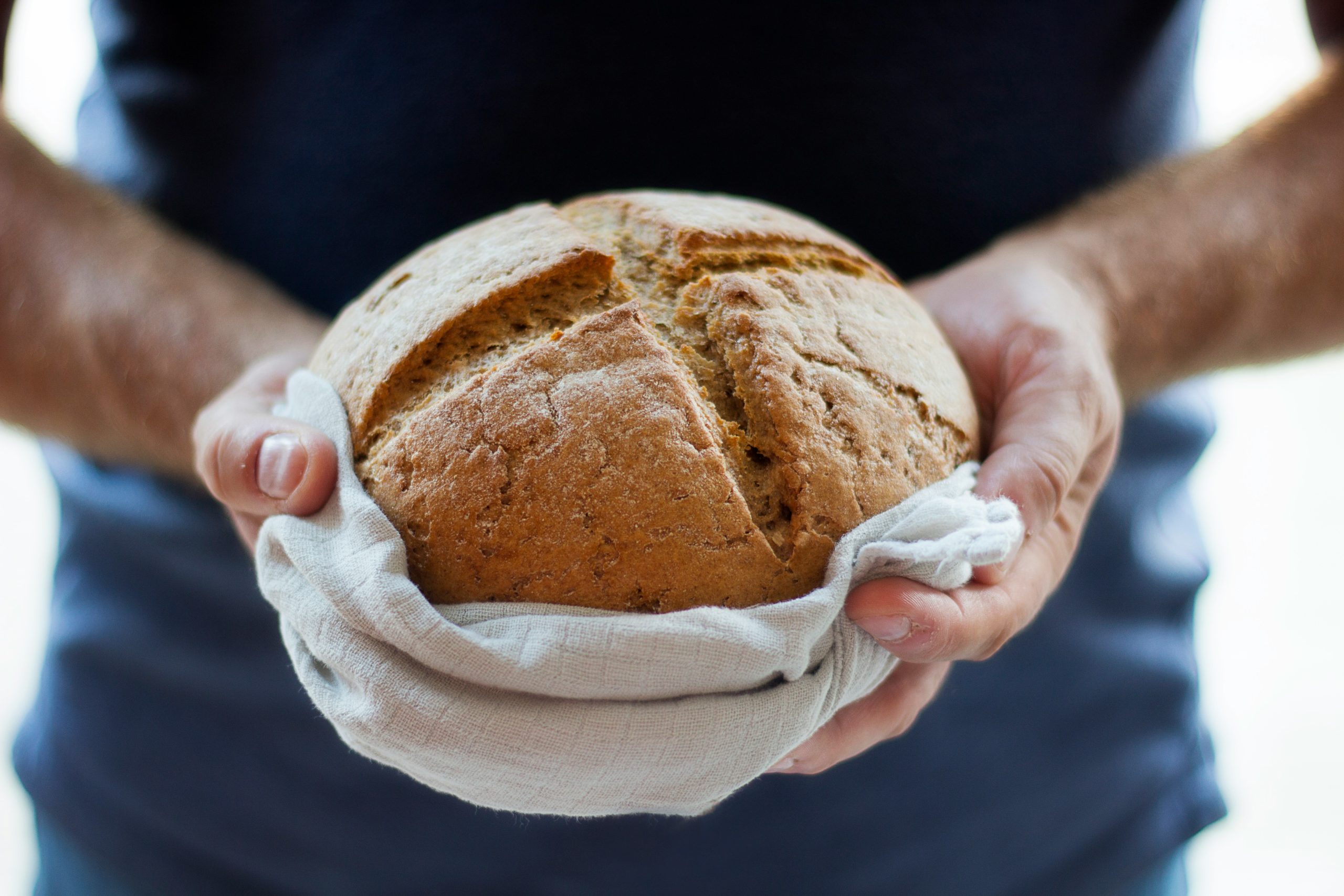
Hope in ordinary days might look like baking bread for a neighbor. It might look like walking your child to school, or praying for someone who would never ask. It might mean saying yes to friendship again, even though you’ve been hurt. It might look like planting something, or forgiving someone, or tending something that no one else will notice.

And it always means choosing presence over escape. That is the heart of Anam Cara living: to believe that God is here, already at work, already healing, already waiting for us to join in.

So let your hope be small, and let it be faithful. Let it take the shape of daily life. Trust that Christ is not waiting for you on the other side of suffering, but walking with you through it. Trust that the Kingdom is coming quietly, in the hands of those who love.

This week, pay attention to the ordinary. What small thing might hope invite you to do today? What act of beauty or kindness might become your way of saying, “I still believe”?

Because hope isn’t a place we arrive. It’s a way of being in the world. A way of staying awake. A way of loving what is, and believing that what is being healed is already holy.


Photo by Kate Remmer on Unsplash

Where Are My Feet?

To everything there is a season,

A time for every purpose under heaven. – Eccl. 3:1 (NKJV)


I’m not a summer person. Born in the Fall, under some duress, I prefer cool days that harbor harvest to the full-bodied warmth of June, July, and August. And yet, I know the wisdom of this season, too. The way the light is everywhere, catching all of us by surprise, even in its abundance. The way sunsets charm us because the days have been replete with activity—we’re not aching for more, but ready for the rest evening brings. I acknowledge the good of these days, even as I stumble under their density.

Sometimes, my seasons are asynchronous: I’m all Spring spiritually even though it’s Winter. Other times, I’m solidly in hibernation when the days are popsicle-long. This year, the congruity has been shocking: the saturation of Summer is both physical and spiritual. My soul is engaged in the kind of work that will eventually lead to worship, and I use the passive voice intentionally. To mix my metaphors, God is more than tinkering around under the hood—the Spirit is engrossed in transformation, tearing apart and rebuilding parts of me I thought were just fixtures and turn out to be wearing down the rest of my world. Externally, transition meets me at almost every turn, from friendship to community to my body to family and back again.

In times like these, spiritual practice is more than a formality and deeper than formation. It’s breath and life and a way to orient myself into the goodness around me: God, myself, others. More than a reminder, it’s the kind of revelation I need to remember that this isn’t destruction (as much as it feels like it); it’s Love at work.

Seasons like this remind me not to set the bar too high. I’m not here to achieve or progress or transact my way to spiritual success. Instead, the simple acts are the ones keeping my sanity, anchoring me in the Story.

For me, right now, it’s a simple, grounding, embodied question: Where are my feet?

I know that sounds like a spiritual metaphor, and I’m not against reading it that way. But before I go existential (which is where I like to hide, if we’re being honest), I have to start with my banged-up* and beloved self. Where are my actual feet, right now? What do they feel like? Can I wiggle my toes? 

These simple questions are an entry into mindfulness and, for me, so much easier than a clear-as-mud body scan, where I mindfully notice each part of my body in turn. As someone experiencing hormonal and physical change, these large-scale scan leave me more confused and in conflict than I started. My very skin is in transition (oh, hello, puberty in reverse), and sorting out these new-to-me messages can easily spiral me out. This coming from someone who wrote an entire book on our bodies and the goodness of meeting God in them—I’ve done a body scan or two thousand in my day.

Here’s the thing, though. Seasons change. What was soothing in one is stifling in another. You wouldn’t suggest a swimsuit in the middle of subzero temperatures any more than you’d sweat it out in a parka when the thermometer is peaking. That says nothing against either the swimsuit or the snow gear. And needing simple isn’t a failure; it’s simply self-awareness.

The question of my feet allows me to step back (pun absolutely intended) and reassess my worldview. Am I living in scarcity, believing I am not beloved? Am I panicking because my old ways don’t work, and the patterns of peace haven’t yet been established? Can I come back to being held and supported by God, by this battered Earth beneath me, by the network of humans around me and throughout history who have chosen for the good? Can I let go of trying to figure transformation out and simply be where my feet are? Somatic practitioners call this a method of self-regulation. It aligns my nervous system with the truth of my security, allowing me to respond rather than react and consent instead of resigning. I call it holy integration, a response to God’s kind call to take off my sandals, reminding me that the place where I’m standing is holy ground (Ex. 3.).

As a spiritual director, I’ve been formed for almost two decades by holy curiosity, but in seasons like these, it’s easy to slip into hyperdrive, focusing on sorting things out to be safe instead of staying in the posture of prayer that starts with, I wonder… or What might be here? And when that happens, one of the best and kindest ways to get my feet back under me is actually to ask where they are right now.


*To be clear, I’m not being physically beaten. But living with a connective tissue disorder, being a multiple heart attack survivor, and working to embrace my currently perimenopausal body means I’m feeling the wear-and-tear of living in this world.


A Prayer for Paris, for Beirut, for the World

Lord, as your beloved St. Francis said, I want to be an instrument of Your peace.
I pray for comfort for all who mourn in Paris,
for all who mourn in Beirut,
for all who mourn in the slums of the Philippines,
for all who mourn this whole world round.

Forgive me, God, for the ways I perpetuate the myth
that some lives matter more than others.
That a concert goer in France matters more than
a brown girl abducted in Pakistan
or an old Russian man who died after his vacation,
perhaps his last trip to the beach, before
he was set to retire amidst the love of his grandchildren.

Forgive me, God, for choosing to look away
from the violence and unrest until
I am forced to look, because the faces in torment
and agony look just like mine, and it is terrifying
to see my own face covered in blood,
and so I pray.

Forgive me, God, for how easily I call this terror
“senseless,” when, were I to have lived in the conditions
and the stories that have been fueling hatred and
unrest for centuries, violence might make much more
sense to me. The only way, perhaps.

Help me, Father, to mourn with those who mourn,
the whole world over, unafraid of bearing that pain
because You bore it—bare it—for and with us,
with me.

Help me to suffer as You suffer, when your children—
in Paris, in Beirut, in Baghdad, in Lasaka, in Port-au-Prince—
in more places than I can name, ache, weep, bleed
and die.

Give me Your heart of compassion, and
even more, give me Your courage to drink the cup,
to die to myself and my privileged comforts,
to truly be used by You
as an instrument of Your love
and peace.

Amen.


A Prayer for Aaron Alexis’s Mother

The events at the Washington Navy Yard have broken my heart on so many levels recently. I am (very) tangentially connected to one of the victims of the shooting, who leaves behind a beautiful little family—young girls who will never get to walk down the aisle on the arm of their dad or have him wave to them as they cross the stage to receive their graduate degrees. The trauma and pain each family must be experiencing is beyond words. And I am so deeply aware of the tragedy and torment of mental illness, the ways that it robs you of reason and hope, and the ways that we turn from mental illness instead of toward it (I hold myself guilty on that account, oh too many times).

I don’t wish to minimize any of this suffering, or the regular suffering going on around the world, but I have to share how deeply my heart has been caught by the sorrow of Cathleen Alexis, and how she will never know why her son did this, will walk bearing the pain of his actions as well as the pain of his loss. As I sat with that pain, and the tug of my heart toward God, toward prayer, I came across this blessing from John O’Donohue.

Cathleen Alexis, I don’t know if you’ll ever read this, on this small corner of the internet devoted to prayer and silence and hope and God. I don’t know if this will ever reach you, but if it does, I hope that it soothes the torn edges of your heart just a bit. I pray it for you today, as I pray it for every parent whose child has committed a crime. I am so sorry that you will never have the ability to ask Aaron the questions your heart needs answers to—I pray that God will meet you in that ache and fill you with His comfort and kindness.

Cathleen Alexis, and every parent whose child has gone off the rails, this blessing is for you.

For the Parents of One Who Has Committed a Crime

No one else can see beauty
In his darkened life now.
His image has closed
Like a shadow.

When people look at him,
He has become the mirror
Of the damage he has done.

But he is yours;
And you have different eyes
That hold his yesterdays
In pictures no one else remembers:

Waiting for him to be born,
Not knowing who he would be,
The moments of his childhood,
First steps, first words,
Smiles and cries,
And all the big thresholds
Of his journey since…

He is yours in a way
No words could ever tell;
And you can see through
The stranger this deed has made him
And still find the countenance of your son.

Despite all the disappointment and shame,
May you find in your belonging with him
A kind place, where your spirit will find rest.
May new words come alive between you
To build small bridges of understanding.

May that serenity lead you beyond guilt and blame
To find that bright field of the heart
Where he can come to feel your love

Until it heals whatever darkness drove him
And he can see what it is he has done
And seek forgiveness and bring healing;
May this dark door open a path
That brightens constantly with new promise.

John O’Donohoue, The Bless the Space Between Us

Cathleen Alexis, I know that those new words, those small bridges of understanding, are not possible for you, or for Aaron, now. I know that Aaron can’t seek forgiveness, and I know that breaks your heart. But I pray that beyond the breaking, there will be bridges—bright, unexpected moments of connection—that bring understanding and hope to your soul. I hope that this dark door will one day brighten, indeed, with new promise. I will be praying that for you, and for your family. I will be praying that for every parent whose child has committed a crime—every parent who remembers their son’s or daughter’s delighted giggles on the playground and ache with the agony of knowing what they have done. Because you still hold him in your heart has he was—human, flawed, broken, beautiful—and that is a great gift to us all.


Image source: Layout Sparks, door hollow way dark.

A Man Who Lived Humbly

In the coming days, there will be many wiser, deeper, more theologically profound voices who speak both their grief and their love in the passing of Dallas A. Willard. There will be many words said, many who voice their gratitude, many who share stories of life transformation, transformation brought about by Jesus, but facilitated by Dallas’s work and teachings.

What I will say of my very brief encounters with Dallas in person, and with his teachings and writings in depth, is this: he was a man who lived humbly with his God.

In the times that I was able to spend with Dallas, what impacted me the most was not necessarily his great knowledge (although that was profound) or his incredible ability to communicate the complexity of God simply (which was a stunning gift) but the way that the gospel of Christ communicated itself so freely through his humble spirit.

I remember watching at a particular conference at which Dallas was a keynote speaker, as person after person came up to speak to him, to ask a question, to express their thanks. Although he was clearly traveling with a small carry-on suitcase, notably on his way to check out from the hotel and get to the airport, he stopped for each one that stopped him. He listened, intently, despite the fact that he inevitably had a plane to catch, a timeline to follow. He interacted with love, no matter how often people waylaid him. Just watching him made me feel as if Christ were in our midst.

At another event, where I was a minor speaker to his headline event, I traveled with him to a small gathering of students—students whom he exhorted to a dedication to the Truth, to Reality, to things that can be known, and the reality of the knowledge of Christ in that context. He listened to their eager visions, and gave leavening advice only when he was asked. Afterward, when he was shuttled to a teaching event, I asked him a question that trembled in the secret places of my heart:

“Dallas, given all of the struggle, all of the ways that the Church has gotten it wrong over the centuries, how do you still have hope for the institution as a whole?”

I remember holding the door for him as he entered the venue and answered my heart’s cry both kindly and clearly.

“I have hope in the Church,” he said smiling, “because I know Who her head is.”

Amazing, how a simple answer can resolve so many years of meandering within my own soul.

More amazing still was the gift that Dallas then gave me before he stood up to teach a room full of believers longing for more. In the shuttling to and from venues, I realized that Dallas’s time of teaching hadn’t received any prayer (not that God couldn’t or wouldn’t cover it). I noted this timidly to Dallas, and he, even knowing my question earlier, turned to me and asked me if I would pray.

In Numbers 12:3, we are given the only description of Moses’s character or physical attributes that explicitly appears in the Old Testament: Now Moses was a very humble man, more humble than anyone else on the face of the earth. Although Dallas would shudder at being compared to the greatness of a biblical character such as Moses, I know that I will remember Dallas both for the wisdom that he brought to us about the Kingdom of God and the Gospel of Christ, and, equally as keenly, his humility.

We are greater because we have known you, and poorer because you have gone, Dallas. But, over all, we are rich in Christ because you more fully cleared the path to His goodness and grace for us.

Thank you.

May you rest in peace, and rejoice with Christ.

I Didn’t Make It Onto Any Lists This Year

nothereIt’s that season.

The season where bloggers, writers, thought-makers and all-around-incredible people give us all a peek into their brains, their libraries, their “must haves” of 2012. I feel a bit like a voyeur, I have to admit, but I’m also busily taking notes.

I really like this time of year. Whatever you feel about New Year’s resolutions, the seam between years is a liminal space, one that invites reflection, vision, hope. This week, I’m working on a new Rule of Life for 2013. I’m looking at my commitments and callings, and choosing to live proactively for those things.

I’m also choosing (to the best of my ability and with Jesus’s much-needed help) to take a hard look at where I’ve been fooling myself this year, what I’ve not been doing well, where I’ve been failing to live out values that are deeply important to me.

That’s hard, I’ve got to tell you. It’s hard not because I’m pretty good at telling you my obvious faults (I am) but because I’m pretty good at using those obvious faults to hide what’s really going on, the things I don’t even want to tell myself. I have a huge capacity for self-deception—we all do.

But I’m also being guided by a phrase I first heard as I was training to become a supervisor. Our professor described the process of supervision as “a long, loving look at the Real.”

Long.

Loving.

Two things that I’d rather squirm away from. You see, I’d rather just take a quick glance at my life. Instead of letting the slow scrutiny of time, exploration and the Holy Spirit reveal some nooks and crannies that I haven’t been into in a while (or some that I didn’t even know existed), I’d rather breeze through, notice the disorganized piles in the corner, admire the new pictures on the wall and tch-tch-tch at the dust that seems to accumulate on the altar of my soul. Moving quickly through the rooms of my life lets me avoid seeing the things that I might only see if I really took that long look: a window frame that’s showing signs of stress, letting in cold air and seeping away my energy; the flow between the rooms that, if I’d look long and hard enough, could use some rearranging to make life a little easier to negotiate without bumping into corners all the time.

And, loving. Oh, do I like to look at myself critically. It’s so easy to do. I know at least some of my limitations, and it’s so much simpler to look at what’s wrong with my soul-space that what’s right. I have a trusted spiritual mentor who tells me repeatedly to STOP BEING MEAN TO TARA.

Being mean is so satisfying though, so useful. I can whip myself harder and beat myself up about the state of the few rooms that I know of—because those are things that I can control. It is so, so much safer to assume that I know what all of the rooms inside of me look like, instead of letting the God who dwells within me show me how vast the space really is. If I knew how big the mansion inside of me really was (or at least had more of an inkling than I do now), I’d have to stop being content playing it small, inviting Him into only parts of me, pretending that what I have to give is really just this little space that I’ve been living in for the past little while.

And, when I choose to love myself, to love what I see, I need to receive the grace that I so readily give. To sit under a loving gaze for a long time—my own loving gaze—is to really accept that I am the Beloved of God, that my needs matter, and that the performance imperatives that I step back into so quickly (I’m only valuable if…, When I get this type of recognition, I’ll know that I’m contributing to the world.).

And this is where I tell you that I didn’t make it onto anyone’s list of the most interesting writers or up-and-coming women to watch. This week, I’ll be revising my website to state that the book that I’m writing will probably come out in 2014—I’ve missed a major deadline along the way this year. I haven’t blogged like I’ve wanted to, I haven’t written, and I haven’t been out there finding, meeting or inspiring the kinds of people (all of them truly wonderful) who will be changing the world in 2013.

It’s as part of that long, loving look at the Real that I tell you that—because Jesus doesn’t care how many lists I made it onto. He isn’t impressed when I get a mention on Twitter, or share this blog post on Facebook. He isn’t waiting for me to change the world—He isn’t waiting for anything from me.

okay

Instead, He’s waiting for me to recognize who I already am. He’s standing patiently, kindly with me until I stop scurrying through my life, and, when I do, He’s ready to show me what He sees about me.

I’ve done a little of that slowing down this week. Just a little. And there’s more to come. There are some beautiful things God has shown me about myself. Beautiful, sacred things that I’m going to ponder in my heart.

And He’s reminded me, again, that He’s here, in the midst of my messes, failures, and also-rans. That He’s using my desire to be recognized, molding and shaping it into something different, something redemptive. He’s showing me that I’m more than I think I am, inside and out, and that He has some pretty incredible places to explore with me in 2013.

So, I didn’t make it onto any lists this year. And, true confession, that still really irks me some. I can’t get away from that. But I can let it propel me beyond the perimeters of my soul, into the more that God has waiting for me.

And that’s a “Best Of” list that I can’t wait to read.

What about you? Do you rush through self-evaluation, just to keep things safe? Is there a way that you weren’t recognized in 2012 that stings? What do you think God has to say about that?


Siri & Jesus

Cameron Strang (editor of Relevant) posted this image from his recent conversation with his iPhone:


I was encouraged that the programmers of Siri would recognize their limitations.

How would you respond to this question? Or to someone asking this question of their phone?

And When The Saints…

In the Western church calendar, November 1 is All Saint’s Day. Traditionally know as Hallowmas (hallows meaning saints and mass being the service or celebration) or All Hallows, the evening before came to be known as All Hallows Eve, or Halloween. Although the latter has most of the culture’s attention, All Saint’s Day is the actual celebration of the saints, both past and present.

So, what is All Saint’s Day? Originally established more than a thousand years ago, All Saint’s is a day dedicated to the people of God—past, present and future. Although attention is focused on those saints who have gone before (see this post on ‘Why Dead People Matter’), there is a real celebration of the great cloud of witnesses of which the current Church is a part.

On November 1, we recognize that we have inherited a great legacy in the lives of those who have lived faithfully and well before us. We humbly admit that we cannot go it alone. And we gratefully give thanks that God never meant us to.

If you’d like, consider praying one or both of these prayers at least once during the day today.

Almighty God,
who hast knit together thine elect
in one communion and fellowship
in the mystical body of Your Son, Christ our Lord:
Give us grace so to follow Your blessed saints
in all virtuous and godly living,
that we may come
to those ineffable joys
that thou hast prepared for those
who unfeignedly love thee;
through the same Jesus Christ our Lord,
who with thee and the Holy Spirit liveth and reigneth,
one God, in glory everlasting. Amen

Book of Common Prayer, 1979


Father, All-Powerful and ever-living God,
today we rejoice in the holy men and women
of every time and place.
May their prayers bring us your forgiveness and love
We ask this in the name of Jesus Christ our Lord. Amen.
Liturgy of the Hours

Why Dead People Matter

Around the world on October 31, men, women and children don costumes ranging from cute to creepy. Halloween is now the second largest holiday after Christmas, and, whatever your beliefs, whatever your perspective on this day, you will be hard-pressed not to encounter one or more costumed undoubtedly darling tot asking you for a “trick or treat!”

While there are a variety of valid reasons for both participating and choosing not to participate in the more popular Halloween traditions (wearing costumes, trick-or-treating), there is one thing that I think the day helps me to remember: the importance of dead people.

When I say ‘dead people’, I’m not talking about zombies, vampires or any other versions of the undead that you’ll see in costume and on the screen (TV or movie) today. It may be easy to get fascinated with the macabre or frightening—and there is some sociological evidence that zombies are tapping into a certain post-modern angst that we all feel —but I think there something uplifting to be found in focusing on dead people, without the gore and guts.

You see, most of us are addicted to the new, the current, the popular. If you’ve ever been overcome by a desire for the newest device, the latest fashion or even a desire to visit the new restaurant in town despite the fact that you hate Mexican, you know what I mean. Popular culture pushes us toward what’s “this minute”, relegating yesterday’s experiences into the place of the passé, the uncool. If you own an Apple product of any kind, you’ve felt the dejection of having whatever your newest thing is surpassed by the next-newest.

And that’s why I like dead people. Dead people aren’t interested in keeping up appearances, aren’t up on the latest trends, and really don’t care if you have the most recent do-dad. On top of that, most of the dead people who have written things down have lots of really wise things to say about the spiritual life and how to live well with God (before and after you die.)

If you’d like a primer, Renovaré just came out with a wonderful compilation of writings by dead people—being dead was, in fact, one of the criteria for being included in the book. It’s called 25 Books Every Christian Should Read, and despite its somewhat intimidating title it is a great entrée into the spiritual classics. There are 25 entries, each with a small excerpt of important writings of really smart (you guessed it) dead people. There’s some history of what the person did before they were dead, and some helpful thoughts and questions for reflection.

Alternately, you can do what I did which was slog, ahem, suffer, ahem, swing through a semester’s worth of the spiritual classics in seminary. Personally, I think picking up 25 Books and learning which of the dead people you’re most drawn to is a better idea. Then pick up a full-length version of their works and get to know them a little more deeply. Dead people can be a lot of fun.

Art, Delight, and the Spiritual Life

Today I am honored to welcome a guest blogger to the Anam Cara blog—my colleague, friend and constant source of inspiration and hope, Christine Valters Paintner. Christine is a spiritual director, author, retreat leader and speaker, as well as a supervisor of spiritual directors. Her Abbey of the Arts is a wonderful place to find rest for your soul. Christine's most recent book, The Artist’s Rule: Nurturing Your Creative Soul with Monastic Wisdom, is one of my favorite's to come out this year on the spiritual life and next week I'll be doing a giveaway for a copy. I asked Christine if she would write on "art, delight and the spiritual life." I know you'll enjoy her insight as much as I do…

 * * *

The law of Wonder rules my life at last

I burn each second of my life to love

Each second of my life burns out in love

In each leaping second love lives afresh.

–Rumi


When Tara asked me to write about art, delight, and the spiritual life it was really that word “delight” which shimmered for me.  Summer for me is a season of savoring sweetness and delight, of relishing the gift of abundance as I walk through our weekly farmer’s market or watch my dog romp and play in wide open fields or cherish long warm evenings.

A former theology professor of mine, Alex Garcia-Rivera (who sadly passed away last year), taught me a great deal about beauty.  “Beauty,” he would say, “is that which moves the human heart.”  I loved that definition, so simple and yet profound.  When I cultivate beauty in the world through my art I am seeking to savor that which stirs my heart and offer that experience to others.  I am giving honor to my experience of delight and trusting it as a source of wisdom for understanding the nature of the divine moving through my life.

Trusting our delight and what moves our hearts can sometimes be challenging for those of us who grew up in traditions suspicious of such things.  It takes practice to remember the goodness God lavishly proclaims again and again in the creation story.  When my teaching partner Betsey Beckman dances the creation story she says the words “it was so good” after each moment of creation with such utter conviction and joy that I remember the real meaning of those words. I feel them stir something in me – a recognition of the deep goodness of the creative act.  It takes practice to cultivate our attention to where this kind of wonder arises spontaneously in our hearts and give it room to breathe fully.

Art is rooted in a deeply-felt experience of meaning.  Through art we give can form to our delight.  Sometimes through art we explore grief or other difficult emotions, but giving these a place for expression, we allow them a way to move through us and offer us wisdom.  We open up space for the possibility of delight to arrive again. 

We may not trust these things that pull on our heart because we don’t believe that we truly are “artists.”   We may resist the places where we feel discomfort.  I have recently given myself over more fully to dance.  I am definitely not a “professional” dancer nor do I have anything that closely resembles a “dancer’s body,” and yet I am finding that trusting fully my body’s desire for movement and the delight that stirs in me through this form of expression is unleashing deep wells of joy in my heart. 

This is how we become artists of our everyday lives.  We listen and tend and honor the deep impulses within us.  We begin to trust our own heart’s movement toward joy.  We start to see how simple moments are ripe with possibility:  tending to a garden with our senses fully alive, savoring the preparation of a meal for loved ones, witnessing the unabashed joy of children playing, witnessing our own opportunities for this same unbridled joy.  Whether we write or paint or dance or sing, what matters is showing up for the possibility of delight.  What is important is making room for the creative spirit to stir our hearts and to honor this with some form of expression, to grow more at ease with a spontaneous response to the joy wanting to be unleashed.

How often do you give yourself fully over to something which kindles a deep joy and delight?

What are the art forms which are calling to you but you resist because you fear you are not an “artist”?

What might happen if you simply embrace the joy that comes from this practice, knowing that you are cultivating room for more delight in your life?

Christine Valters Paintner, PhD, REACE is the online Abbess of Abbey of the Arts, a virtual monastery offering online classes and other resources to integrate contemplative practice and creative expression.  She is the author of several books including her two newest: The Artist’s Rule: Nurturing Your Creative Soul with Monastic Wisdom (Ave Maria Press) and Lectio Divina—The Sacred Art: Transforming Words and Images into Heart-Centered Prayer (SkyLight Paths).